French Toast: Where That Flavor Actually Comes From, and How to Eat It on a Gym Schedule
Why does French toast taste so good? The real history, the flavor science, the honest macros, and how to get that warm breakfast flavor on a gym schedule.
Quick answer
French toast is bread soaked in an egg-and-milk custard, then pan-fried until golden. Its flavor comes from four things working together: the custard soak, Maillard browning, warm spices like cinnamon and vanilla, and a sweet finish. A classic two-slice plate runs about 300 calories before toppings and closer to 470 with syrup and butter, with only around 10g of protein. Bowl O’ Gainz French Toast delivers that same comfort flavor as a carb-forward hot cereal you can build your own macros around.
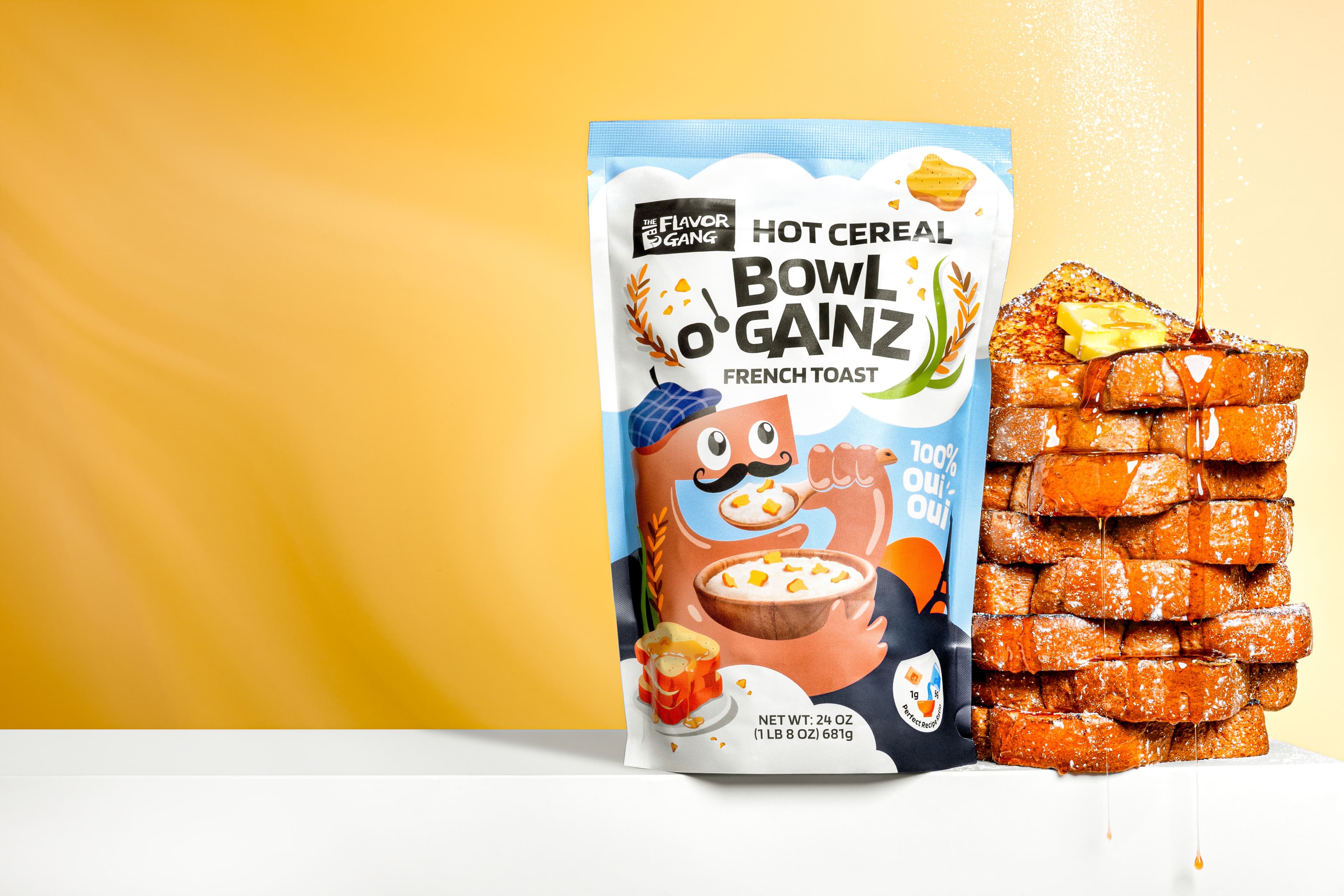
Saturday morning. Pan’s hot, bread’s soaking in egg and milk, and the whole kitchen smells like cinnamon and browned butter. French toast doesn’t need an introduction. It needs a fork.
But if you train hard and track what you eat, you know how that plate usually ends: a syrup-soaked stack of carbs and fat with barely enough protein to call it fuel. Here’s the thing most people miss. The part of French toast you actually crave has almost nothing to do with the white bread or the syrup flood. Once you understand where that flavor really comes from, it gets a lot easier to keep it and drop the baggage.
French Toast Is Older Than France
French toast is simple: bread soaked in egg and milk, then fried until the outside turns golden and the inside goes soft and custardy. The idea is ancient. A Roman-era recipe collection attributed to Apicius describes bread soaked in milk, fried, and finished with honey. By the Middle Ages, versions were everywhere in Europe. Germans called it arme Ritter, or “poor knights.” The 14th-century French royal cook known as Taillevent recorded tostées dorées, “golden toasts.” The French eventually landed on the name that stuck: pain perdu, or “lost bread,” because it rescued stale loaves that would otherwise get thrown out.
So why is it “French” at all? The popular story credits an Albany innkeeper named Joseph French, who supposedly invented it in 1724 and forgot the apostrophe in “French’s toast.” It’s a great story with one problem: the phrase “French toast” was already in print by 1660, in Robert May’s cookbook The Accomplished Cook, more than sixty years earlier. Most food historians file the Joseph French tale under folklore and figure “French” was simply added because it made plain fried bread sound fancy enough to charge more for.
The real takeaway is better than the legend. French toast was never a luxury dish. It was a practical move, turning yesterday’s leftovers into something people actually looked forward to. That’s the same instinct behind every good meal prep Sunday.
Why It Tastes So Good: Four Layers, Not One
French toast flavor isn’t a single note. It’s four things stacking on top of each other, and knowing them tells you exactly which parts are worth keeping.
The custard. Egg and dairy soak into the bread and set as it cooks. That’s why the center turns soft and almost pudding-like instead of just tasting like toast. It’s also where most of the dish’s original protein came from.
The browning. When the surface hits a hot pan, proteins and sugars react through the Maillard reaction, producing the toasty, nutty, bakery aromas you can smell from the next room. Surface sugars caramelize at the same time, adding a deeper sweet edge.
The warm spice. Cinnamon’s signature aroma comes largely from cinnamaldehyde, and vanilla brings vanillin, a compound our brains tie so tightly to sweetness that it can make food taste sweeter than it measures.
The finish. Maple or syrup layers on caramel-like notes and pulls the whole thing together.
Notice what’s missing from that list: the white bread. Bread is the sponge, not the flavor. That’s the loophole every macro-friendly version of this dish runs through.
The Honest Macros on a Classic Plate
A typical two-slice serving of homemade French toast lands around 300 calories, with roughly 33g of carbs, 14g of fat, and only about 10g of protein, based on USDA-derived nutrition data. Then the toppings show up. Maple syrup runs about 52 calories and 12g of sugar per tablespoon, and nobody stops at one. Add two tablespoons of syrup, a pat of butter, and a dusting of powdered sugar, and the plate climbs to roughly 470 calories, with toppings alone accounting for more than a third of it. Swap in brioche or challah and it climbs further.
None of that makes French toast bad. Real food isn’t the enemy, and a plate you love is worth eating. It just means the macro split doesn’t match what most lifters want from breakfast: carbs you control, fat you choose on purpose, and enough protein to matter. A heavy fat-and-sugar mix can also sit like a brick if you’re training in an hour. That’s the gap worth closing.
The Flavor Gang Version: Keep the Flavor, Rebuild the Bowl
Bowl O’ Gainz is The Flavor Gang’s rice-based hot cereal, built on one idea: dessert-for-breakfast flavor that fits your macros. Cream of rice has been a gym staple for years because it’s a carb-forward base that’s smooth, easy to portion, and easy on the stomach before a session. Bowl O’ Gainz keeps that foundation and brings the flavor that most fitness food forgets, across a lineup that runs from Brownie Batter to Lemon Pound Cake to Peanut Butter Cookie. Every bag is handcrafted in small batches.
Bowl O’ Gainz French Toast takes the four flavor layers above and puts them in a bowl. You get the warm, sweet, cinnamon-and-butter breakfast flavor without soaking, frying, or drowning anything in syrup. Where a classic plate stacks fat and sugar on top of the carbs, this is a carb-forward base that’s low in fat, which leaves the rest of the meal up to you. Want more protein? Add it. Need more carbs before a heavy session? Pile on fruit. Cutting? Keep it plain and let the flavor do the work. The comfort stays locked in while the macros stay flexible.
How to Build a French Toast Bowl That Fits Your Day
Cook it according to the directions on the bag, then use one of two moves to turn it into a complete meal.
Make it custardy. For a thicker bowl that eats more like the real thing, slowly whisk liquid egg whites into the cereal while it cooks and keep stirring until the eggs are fully cooked and the bowl thickens. That’s the same custard principle behind pain perdu, and it adds protein without much fat.
Or finish with protein powder. Prefer whey? Stir a scoop of vanilla or cinnamon protein in after the bowl is off the heat and slightly cooled, so it stays smooth instead of clumping.
Then match your toppings to your training:
- Pre-workout bowl (1–3 hours out): Sliced banana or berries and a light drizzle of syrup. The International Society of Sports Nutrition recommends carbohydrate-rich meals in the hours before hard training to keep glycogen topped off, and keeping fat and fiber lower helps it settle easy.
- Post-workout bowl: Egg whites or whey stirred in, a handful of berries, and a small spoonful of nut butter. Carbs plus quality protein after training is a proven recovery pairing.
- Weekend brunch bowl: Greek yogurt, extra cinnamon, chopped pecans, and a teaspoon of real maple. Full French toast experience, measured on your terms.
Want the actual griddled shape? Bowl O’ Gainz also works as a base for protein pancakes and waffles made with egg whites, which gets you the golden, crisp-edged bite with far more control over what goes into it.

Written by Yana Capa-Pasco
Marketing Director