What Is Chipotle? The Smoky Flavor Behind Our Southwest Smash Sauce
Chipotle is smoked, dried jalapeño — earthy, sweet, smoky heat. Learn what makes the flavor special and why The Flavor Gang's Southwest Smash chipotle aioli is the macro-friendly way to get it on everything.
Quick answer
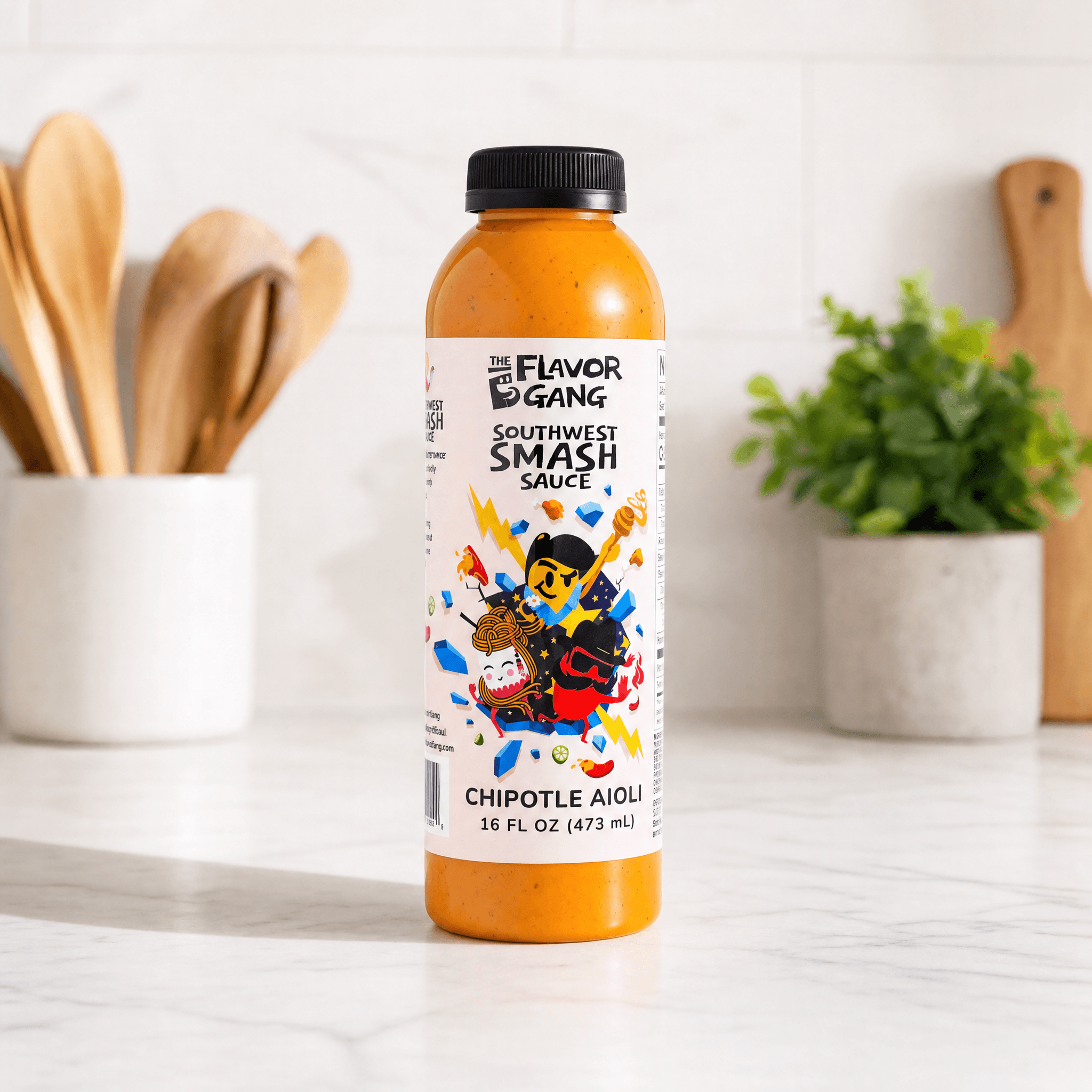
Chipotle is a ripe red jalapeño that has been smoked and dried, giving it a deep, earthy, slightly sweet smokiness with medium heat (2,500–8,000 Scoville units). The flavor is the star of The Flavor Gang's Southwest Smash Sauce, a thick, creamy chipotle aioli at just 35 calories per tablespoon.
Everybody throws the word “chipotle” around like it's a single thing, but most people couldn't tell you what it actually is. Here's the short version: chipotle is a jalapeño that grew up. It's a ripe red jalapeño that's been smoked low and slow until it dries out, and that smoking process is where the whole magic happens. You don't get that deep, woodsy, slightly sweet flavor from a fresh pepper. You get it from time, smoke, and patience.
If you cook your own meals, prep on Sundays, or just want your chicken and rice to stop tasting like cardboard, chipotle is one of the best flavors you can keep in your corner. And we built an entire sauce around it. Let's get into why.
Chipotle Is a Smoked Jalapeño — That's the Whole Secret
A chipotle isn't a separate type of pepper. It starts as a jalapeño, but instead of being picked green and bright, it's left on the vine until it turns deep red and fully ripe. Those red jalapeños are then smoked over wood — traditionally oak or pecan — for days until they're dried out completely. The word itself comes from the Aztec Nahuatl language and roughly means “smoked chili,” which tells you the smoke was always the point. The Aztecs used the process to preserve peppers long before refrigerators existed.
That extra ripening time matters. A red jalapeño is sweeter and carries more punch than its green version, so when you smoke and dry it, you're concentrating both the sweetness and the heat. The result lands in the medium range on the Scoville scale, somewhere between 2,500 and 8,000 units — enough warmth to wake your mouth up, but not the kind of heat that ruins dinner. Most people describe the flavor as earthy, smoky, and faintly sweet, almost like a dried raisin or prune crossed with a campfire.
There are a couple of varieties worth knowing if you ever cook with the whole peppers. Chipotle morita is the smaller, redder, fruitier one you'll usually find in stores. Chipotle meco is smoked longer, turning grayish-brown with a more intense, cigar-like smokiness. Either way, the flavor DNA is the same: smoke first, heat second, sweetness underneath.
Why Chipotle Works So Well in Real Food
Here's the thing that makes chipotle special for anybody trying to eat clean: it adds huge flavor without needing sugar, breading, or a pile of extra calories. Smoke reads as richness on your tongue. It tricks your brain into thinking a dish is heartier and more indulgent than it actually is. That's exactly why smoked flavors show up all over BBQ, Tex-Mex, and Mexican cooking — a little goes a long way.
Chipotle is also stupidly versatile. It plays nice with grilled chicken, steak, eggs, roasted veggies, rice bowls, tacos, burgers, sweet potatoes — basically the entire meal-prep starter pack. The smoky-sweet profile bridges cuisines too, which is why you'll see it in everything from a Texas brisket rub to a fusion grain bowl. When the gym has you eating the same five ingredients on repeat, a flavor this adaptable is what keeps you from quitting your diet by Wednesday.
The Problem With Most Chipotle Aioli
Chipotle aioli is one of the best ways to actually use this flavor — a creamy, smoky sauce you can dip, spread, or toss into anything. The trouble is that traditional chipotle aioli is basically chipotle-flavored fat. Most recipes start with a full mayonnaise base, and the numbers show it: standard chipotle aiolis run anywhere from roughly 95 to over 250 calories per single tablespoon, almost all of it from fat. Drizzle that across a meal-prepped bowl every day and you've quietly torched your macros without feeling full.
That's the exact gap we set out to close. You shouldn't have to choose between food that tastes like something and food that fits your goals.
Southwest Smash: Texas Attitude, Macro-Friendly Math
Southwest Smash is our take on chipotle aioli, and we built it to do everything a great chipotle sauce should without wrecking your day's intake. It's thick, it's creamy, and it carries that real smoky chipotle backbone — Texas attitude in a bottle. The difference is the math: Southwest Smash comes in at just 35 calories per tablespoon, a fraction of what a typical mayo-heavy chipotle aioli costs you. That's a low-fat, macro-friendly sauce you can actually use with a heavy hand.
Because the calories are low and the flavor is loud, it slots straight into any meal-prep lineup. Use it however your week needs it:
- Dip it — chicken tenders, roasted potatoes, veggies, anything that needs a creamy landing pad.
- Spread it — wraps, burgers, sandwiches, breakfast eggs. A thin layer goes a long way.
- Toss it — stir 1–2 tablespoons into a rice or burrito bowl, or coat a protein-and-veggie stir fry for instant flavor.
It pairs with just about every style of cooking — Mexican, American, Asian, fusion, whatever you're making — and it loves steak, chicken, seafood, eggs, and rice equally. The whole point of The Flavor Gang is making macro-friendly eating taste like you're cheating when you're not. Southwest Smash is chipotle done the way it should be: bold flavor, honest macros, no boring meals.

Written by Yana Capa-Pasco
Marketing Director