Workout Fuel That Doesn’t Taste Like Punishment
What to eat before and after a workout, how much protein you actually need, and why flavor is the variable that keeps you consistent.
Quick answer
A good workout runs on two things: carbs going in beforehand and protein coming in after. Most lifters do best with an easy-to-digest, low-fat, low-fiber carb source 60–90 minutes before training, 20–40 grams of protein afterward, and roughly 1.6 grams of protein per kilogram of bodyweight across the whole day. The part nobody puts on the whiteboard is flavor — the best workout diet is the one you can actually stand to eat six days a week.
Your Workout Is Only as Good as What You Fed It
Everybody obsesses over the training. Program splits, rep schemes, whether you should be doing RPE or percentages. Meanwhile the guy who can’t finish his last two working sets isn’t undertrained — he’s underfed, or he ate the wrong thing forty minutes before he walked in.
Your body stores carbohydrate as glycogen, and that’s the tank a hard session pulls from. Those stores are limited, and high-volume training drains them the fastest. Sports nutrition research is clear that glycogen is what you’re protecting when you time carbs around training, and that topping off before a session is the whole point of a pre-workout meal.
So the pre-workout question isn’t really “what’s healthy.” It’s “what gets into my bloodstream fast enough to be useful, without sitting in my stomach like a brick during squats.”
What to Eat Before a Workout
The answer most people don’t expect: something simple. Fat and fiber both slow gastric emptying, which is exactly what you don’t want when you’re about to go heavy or get your heart rate up. Sports dietitians consistently recommend keeping the pre-training meal low in fat and low in fiber, and leaning on carbs that digest quickly — especially inside that last hour before you train.
That’s a problem for a lot of “clean eating” breakfasts. Steel-cut oats, a fistful of berries, chia, almond butter — great food, wrong timing. All that fiber and fat is still sitting there when you’re trying to hit a set of five.
Rice-based cereal solves this better than almost anything else. Cream of rice is finely milled, cooks in a couple of minutes, and digests fast because there’s almost nothing in it to slow it down. That’s why it became the unofficial pre-workout breakfast of competitive lifters long before it had flavors worth eating.
Bowl O’ Gainz is our take on it. Same rice-based, easy-digesting carb base the gym has run on for years — just built so you don’t have to choke it down. Brownie Batter, Crackberry, Peanut Butter Cookie, Loaded Strawberry Wafer, Caramel Coconut Fudge Cookie, Lemon Pound Cake, Plain Jane if you want to run your own toppings. It cooks like oatmeal, doubles as protein pancake or waffle batter with egg whites, and it isn’t going to fight you on the platform.
Timing, without the overthinking
Two to three hours out, a normal balanced meal is fine — you’ve got the digestion window. Sixty to ninety minutes out, go carb-forward and keep fat and fiber low. Fifteen minutes out and hungry? Something small and simple beats training on empty, but that’s a patch, not a plan. Whatever you land on, practice it. Race-day stomachs and training-day stomachs are different animals, and the gut adapts to what you feed it regularly.
What to Eat After a Workout
Here’s where the industry oversold you. The “anabolic window” isn’t a thirty-minute panic sprint from the squat rack to the shaker bottle. The International Society of Sports Nutrition’s position on nutrient timing puts the emphasis somewhere less exciting and far more useful: hitting your total daily protein, spread out reasonably — roughly every three hours across the day.
Dose matters more than urgency. Somewhere in the range of 20 to 40 grams of quality protein per feeding is enough to max out the muscle-building signal for most people. And across the day, the large meta-analysis by Morton and colleagues found that gains in lean mass stopped improving past about 1.6 grams of protein per kilogram of bodyweight, with the upper end of the confidence range landing near 2.2. For a 180-pound lifter, that’s roughly 130 to 180 grams a day. Not four shakes and a prayer — just food, consistently.
If you trained hard and you’re training again soon, carbs come back into the picture too. Pair them with protein and you refill the tank while you rebuild. That’s a bowl of rice and chicken. It has always been a bowl of rice and chicken.
Which brings us to the actual failure point.
The Variable Nobody Tracks: Whether You’ll Keep Eating It
You can build the most perfectly periodized nutrition plan on earth and it’s worth nothing on week seven when you’re standing over the sink eating cold chicken breast and deciding you’d rather order wings.
This isn’t a willpower problem. It’s a design problem, and the research backs it up. Across the diet literature, adherence — not macro ratios, not meal timing — is the strongest predictor of whether a plan works long term. Reviews of weight-loss trials point to palatability as a real driver of that adherence, and studies tracking hunger, cravings, and diet satisfaction find that feeling deprived is what breaks people, not the food itself.
Translation for the gym: sauce is not a cheat. Flavor is an adherence tool. A sauce that makes six ounces of chicken taste like something you chose instead of something you’re serving out a sentence with is doing real work for your physique.
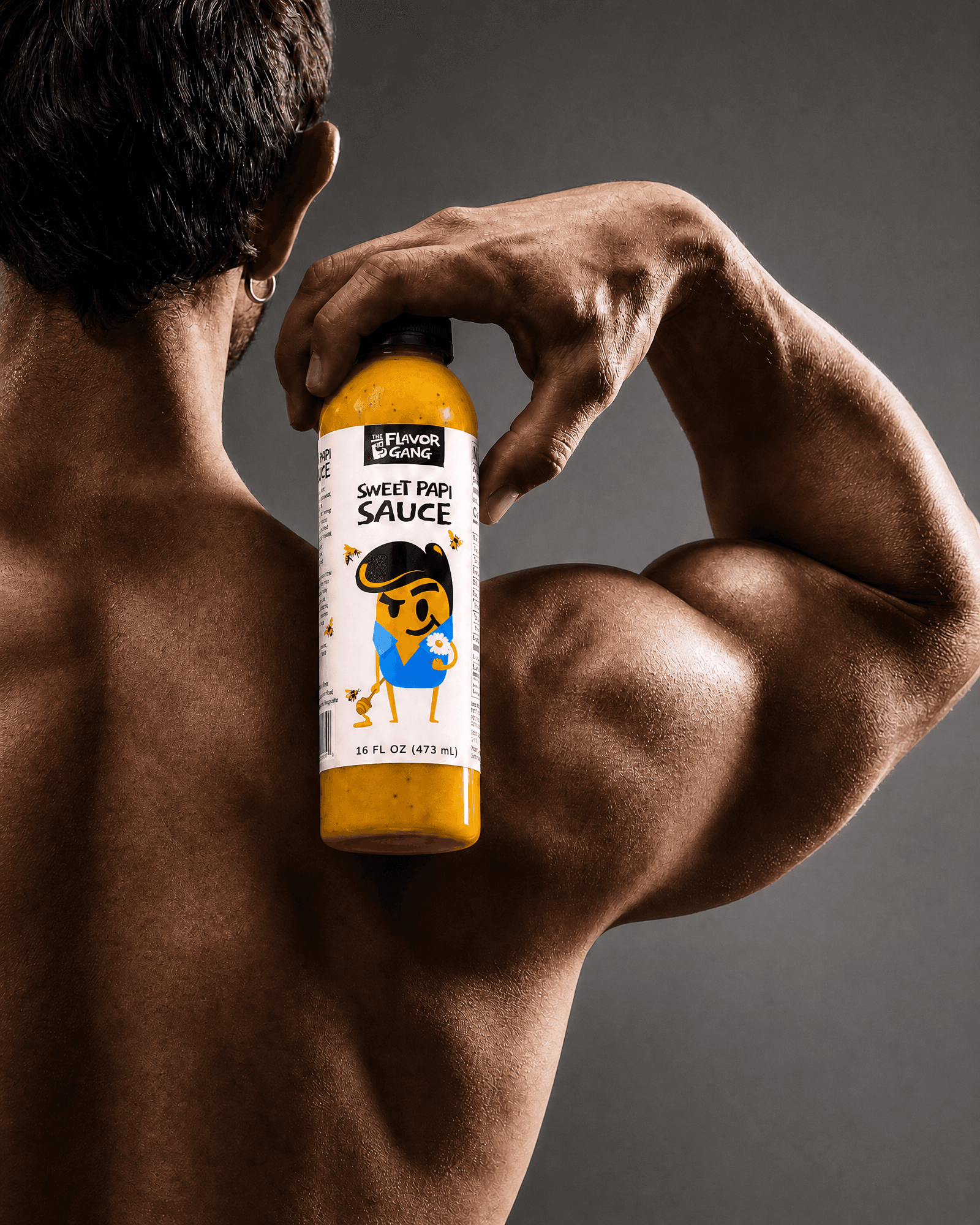
That’s the entire reason The Flavor Gang exists. Flavor Don (sriracha maple) lands at zero calories, zero grams of sugar, and 65 milligrams of sodium per tablespoon — you can hit the whole meal with it and your macros don’t move. Sweet Papi for a sweet-mustard glaze. Thai Sweet-N-Nutty when the rice bowl needs a personality. Smokin’ Poppie for BBQ nights. Bahaha chili-lime on tacos or eggs. Glizzy tangy pickle if you’re that kind of degenerate, and we respect it.
Our seasonings do the same job at the pan instead of the plate, and Lil Saucey packets exist for the meal prep you carry to work — because the container that lives in the office fridge is exactly where discipline usually goes to die.
A Workout Day That Actually Works
Nothing exotic. This is the shape of a normal training day for someone lifting in the late morning:
- Wake up: a bowl of Bowl O’ Gainz, cooked thick, eaten 60–90 minutes before you leave. Fast carbs, low fat, low fiber, tastes like dessert. If you’re adding protein powder, stir it in after it comes off the heat so it stays smooth.
- During: water and salt for a normal 45–75 minute lifting session. If you’re going long or doing hard conditioning past an hour, that’s when in-session carbs earn their keep — roughly 30–60 grams per hour.
- After: a real meal within a couple of hours. Protein at 20–40 grams, carbs alongside it, and enough sauce or seasoning that you’re not negotiating with yourself to finish it.
- The rest of the day: keep protein coming every three or so hours until you’ve hit your daily number. Eggs with Flavor House. Stir fry with Take-Out. Whatever gets it done.
That’s it. The plan isn’t complicated. Making it survive month three is the hard part, and that’s a flavor problem more than a science problem.
Fuel It Right, Then Make It Taste Right
Training is the easy part to stay excited about. Eating the same way for months on end is where people quit. We build small-batch sauces, seasonings, and Bowl O’ Gainz hot cereal in Texas for exactly that stretch — the part where you’re doing everything right and you just want the food to be worth it.
Bold flavor, zero excuses. Load up at theflavorgang.com and go make your next workout worth eating for.

Written by Yana Capa-Pasco
Marketing Director